Tough Shit: Life Advice from a Fat, Lazy Slob Who Did Good

author: Kevin Smith
name: Paul
average rating: 3.81
book published: 2012
rating: 2
read at: 2012/04/16
date added: 2012/04/16
shelves: memoir, humor, non-fiction, new-in-2012
review:
Talk about unusual: I just finished Kevin Smith‘s sort of memoir-meets-motivational-self-help-vanity-project in one sitting. This is unusual primarily because having the time to read nearly 250 pages in an evening almost never happens, but it’s also unusual because you might expect that I’d only devour a book this way if it was amazing.
Well, Tough Sh*t isn’t amazing. It’s kind of repetitive, honestly: Smith has an analogy about Wayne Gretzky that he references a half dozen times; he talks a lot about how amazing his wife is; he frequently describes his up-and-down relationship with Harvey Weinstein. Sometimes it feels like the individual chapters were written separately and he’s refreshing readers who are perhaps not privy to earlier discussions about his pet concepts or jokes, but then he’ll do it within pages of each other as well so maybe he just doesn’t have a great editor?
The book is funny, but not in the way that generates actual real-world laughter. It’s sort of effective as a motivational tome, except that he branches off into über-digression an awful lot so the point gets muddled and spread around. There’s some interesting anecdotes, but it’s not riveting.
What Tough Sh*t does do well is capture a tone that set me at ease, coming across like listening to a friend sit in your living room and tell stories. Smith is sort of a strange person to write something akin to self-help because his success seems a bit accidental and he spends so much of the book kind of justifying his work that one gets the impression that even he isn’t quite sure how it all works out for him. He’s smart but he seems to suffer from the same affliction as a lot of people who had just the right mix of serendipity and skill: He assumes that the same lighting can strike for everyone.
Granted, Smith is bright enough to know that’s not the case so he tempers the message a lot and comes up with the core concept that action is king. It’s a bit Nike in its core motivational strategy: Just do it. Of course, it’s easy to say that when the one time he Just Did It without any kind of fallback or failsafe he ended up with the indie hit Clerks. Not everyone is going to do that, so he mumbles something about how success doesn’t matter and skims over the fact that he writes about spending money with the casual nonchalance only someone with plenty of it can afford. I’m not saying its disingenuous, but the book wears enough of its author’s bais and “if I can do it, obviously anyone can” over-simplicity on its sleeve to not ever be in contention for a legitimate life manual.
Which is not to say there isn’t some valuable insight here. The opening chapter, a crassly told case study in how, from a biological perspective, every living human is the result of astronomic odds, is strangely effective in giving perspective on the moral imperative Smith seems to ascribe dream-chasing. He also makes a semi-convincing case for art as a legitimate pursuit and offers some reasonable-sounding practical advice for tempering expectations when pursuing lofty ambition. The biggest thing the book made me reconsider was criticism, which is a bit of a funny thing to say in a critique of his book.
Smith decries criticism, then blasts critics for getting understandably haughty when he stabs at their means of expression, but there’s circular logic going on somewhere (I suspect both sides have valid points). Obviously Smith himself isn’t exempt from criticism: He spends a lengthy chapter describing his run-in on Southwest airlines over his weight and seat accommodations which amounts to a very pointed criticism of that company. He is also unshy about criticizing actors, other movies and business execs in Hollywood, so the sword kind of cuts both ways. But he did make me think about what I do when I review books and movies online. Granted, I don’t get paid to do it and I’m no authority nor do I even have much of a voice, but it does pay to be reminded sometimes that I am publishing my thoughts and opinions online where anyone, including the creative forces behind those works, can see them. Potentially, me saying negative things could be hurtful and it’s worth remembering that while I have every right and justified intention to describe what I personally thought of something or what it made me think about, it’s not really worthwhile or even accurate for me to judge the artistic value of someone else’s work.
That doesn’t mean I should just avoid writing with an empirical tone, only that it’s worth it to remind myself as I discuss what other people are doing by way of self-expression, perhaps some day I may be the target of people like myself who are dissecting what I’m expressing. I would expect those people to be honest about what they think or felt about something creative I did, but much as I wouldn’t want them declaring whether my work is worthy or not, it’s not my place to do so either.
In that spirit, my opinion of Tough Sh*t is that it was half-successful at doing what I suspect it was trying to do. It did make me think some, it was easy to read but ultimately it was probably more for people who are much bigger fans of Mr. Smith than I am. I’m certainly not sorry I read it, but I probably won’t go searching for more.


Forensic Experts Recover Manuscript Written By Blind Woman With Inkless Pen
Forensic Experts Recover Manuscript Written By Blind Woman With Inkless Pen:
I love this story, especially the part where the police forensic experts told her they loved the story and couldn’t wait for more.
#
LAbyrinth: A Detective Investigates the Murders of Tupac Shakur and Notorious B.I.G., the Implications of Death Row Records’ Suge Knight, and the Origins of the Los Angeles Police Scandal

author: Randall Sullivan
name: Paul
average rating: 3.92
book published: 2002
rating: 3
read at: 2012/04/10
date added: 2012/04/11
shelves: conspiracy, non-fiction, true-crime
review:
A couple of months ago my wife and I got sucked into some television show about 90s gangster rap and the glib details in that program prompted a discussion about the shooting deaths of Christopher Wallace (Notorious B.I.G./Biggie Smalls) and Tupac Shakur. I got kind of interested in the story because of course I had heard about it and I remember the news coming out at the time, and I’d heard the grumblings and rumblings since that there was something fishy about the way the murders had never been solved. That interest prompted me to watch the Nick Bloomfield documentary “Biggie & Tupac” (which was okay but not great) and check out Randall Sullivan‘s book LAbyrinth from the local library.
Like the documentary, Sullivan’s book is okay, but not great. The story underneath this is interesting, but watching the two you get the distinct sense that all the conspiracy theorizing smoke is coming from a single source, an ex-LAPD detective named Russell Poole. Poole worked on the Wallace murder case and was part of the task force investigating internal corruption that would eventually be known as the Rampart Task Force. Sullivan goes as far out of his way as possible to make Poole look like a supercop and something of an idealized example of the perfect police officer, which makes sense when you realize that his book hinges on the credibility of this one principal source.
Documentarian Bloomfield cites and interviews Poole in his film as well, which further reinforces the notion that a lot of the “this came from the top” language and veiled (or not-so-veiled) cries of “cover up” originates in a single man’s mind and is propagated by those who either believe or are predisposed to believe his tale. Which is not to say Poole is incredible, only that it would be nice if the characterization Poole gives that there were others in his department who agreed that something odd was going on during the investigations would step forward and either state definitively that they believe in Poole’s evaluation or that they dismiss him out of hand.
The nutshell version of the yarn is that Shakur and Wallace were killed as part of an elaborate plot by CEO of Death Row Records, Marion “Suge” Knight, to get rid of Shakur who was preparing to leave the label, and solidify the cover story that Shakur was killed as a result of the surging East Coast/West Coast tensions in the rap world, notably between Death Row and Sean “Puffy” Combs’s Bad Boy Entertainment label (of which Biggie was a part). By this explanation, then, Wallace’s death was more of an opportunity to prove, after the fact, that Shakur’s death was related to the rivalry. The explanation doesn’t make a lot of sense; if Suge Knight wanted to blame Shakur’s death on Bad Boy Entertainment, it might have been more logical to kill Wallace first and have Shakur die as the retaliation. Of course, the case could be made that such a reversal might have cast more suspicion on Death Row for instigating/escalating the tensions as opposed to casting them as simply wanting revenge for their downed star. In any case the story only makes sufficient sense when Sullivan characterizes the attack on Wallace’s convoy that left him dead as being most likely intended to eliminate Bad Boy CEO Combs, but his car had run through a yellow light, leaving Wallace’s car as the de facto convoy lead, suggesting the bullets weren’t meant for him at all.
Sullivan paints a portrait of Suge Knight as a gangster in the sense of Al Capone, perhaps even worse. Sullivan gleeful recounts hearsay of every mythical or urban legend style tale of brutality, intimidation and shady deal perpetrated by Knight and explains away the brazenness by saying that he was protected by a group of cronies who were dual employed by both Death Row and the LAPD. These gangster cops seem to float through Sullivan’s narrative like phantoms, showing up when it seems convenient and drifting away whenever legitimate law enforcement personnel try to make solid connections between the label and the department. Of course, they have help from a corrupt Deputy Chief (and later Chief), Bernard Parks (among others), who pushed back on any avenue of inquiry that may have revealed links between the record label and the police.
However, Sullivan somehow manages to both connect and decouple the insinuations at the same time by contextualizing the whole attitude of the department (and perhaps the city at large) in the framework of the heavy racial tensions of the time. This is, remember, the era of Rodney King and the riots in 1992, OJ Simpson and the racially-charged “Trial of the Century,” not to mention the event that Sullivan opens the book with, the shooting of African-American Kevin Gaines by white cop Frank Lyga (Gaines, it turned out, was also a cop who may have had ties to Death Row). The problem with explaining why the department wouldn’t deal with the possibility that black cops might be working with Death Row is because it fully explains why the department would be reluctant to investigate black cops, period. Sullivan (and Poole) try to characterize the feet dragging by the top brass as indications that Suge Knight had more than just a few dirty cops on his payroll but had the direct or implicit backing at the highest levels, but I think that’s just sensationalist wishful thinking. It doesn’t necessarily excuse the LAPD from making matters worse by not dealing with dirty cops, but it isn’t quite as book-selling as saying “Parks helped cover up hundreds of crimes on Death Row’s behalf!”
In a lot of ways that summarizes my complaints with LAbyrinth. Sullivan comes across like Oliver Stone in JFK, making every possible connection he can and tying it all into a central—and intentionally vague—thesis of “There Is A Conspiracy!” Some of the items stick, I’m sure, but for all of Sullivan’s shots leveled at the LA media (principally The Los Angeles Times) for being predisposed to dismissing a conspiracy angle, he’s no better, just working from the flip side of that coin. Sullivan also comes across as a strangely prejudicial narrator, injecting his personal politics not overtly but at that just-beneath-the-surface level of a slightly off Vietnam veteran talking about the war. There may not be any actual racial slurs tossed or anything you can pinpoint as being obviously racist, but the tone and phrasing leaves no doubt what the opinion really is. It’s evidenced even in the way Sullivan throws in disgusted asides about how white cops can’t follow the evidence if it looks like it might lead to anyone black being accused of a heinous crime. The subtext of reverse racism is obvious and highly distasteful coming from the author of the book. If these kinds of accusations are pertinent to the material, a truly neutral journalist would let them come in quotations from sources.
I’m really rather torn about this book. On one hand, it’s a fascinating look at a set of cases that will probably always be linked together, it’s a wonderful conspiracy tale and an incredibly interesting, if frightening, look at a particular time in Los Angeles’ history. On the other hand, the book is clumsily written and lacks a lot of journalistic integrity which makes it feel salacious. I suppose that may just come with the territory for conspiracy books (another example is Jim Marrs‘s Crossfire about the JFK assassination, which has the same grudging appeal to a reader like me), but one wishes there were somehow a more studious examination of the subjects out there.
The Call of Cthulhu (2005)
The Call Of Cthulhu
 ★★★☆☆
★★★☆☆
Directed by: Andrew Leman
Written by: Sean Branney
Based on the Story by: H.P. Lovecraft
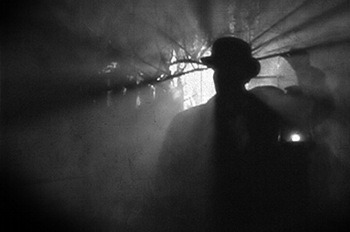
A very low-budget film done in the style of classic silent films, this is an incredibly faithful adaptation of the H.P. Lovecraft tale, including all the flashbacks, multiple characters, the framing device and the creepy sense of dread that Lovecraft was so good at—well, not good at writing since Lovecraft was a terrible writer. But good at inspiring, I suppose. Mythos fans should enjoy this movie a lot, though the stylistic choice worked well for me, I can see how people unfamiliar with Lovecraft may find it a bit plodding. Mostly the film just makes one realize how amazing a really well done modern update would be on screen.
Mirror, Mirror (2012)
 Mirror, Mirror
★☆☆☆☆
Directed by: Tarsem Singh
Written by: Jason Keller and Melisa Wallack
Based on the Fairy Tale by: Jacob and Wilhelm Grimm
In nearly every case, when presented with the opportunity to re-visit some entertainment media I’ve experienced before—a book I’ve read, a show I’ve watched, a movie I’ve gone to, a game I’ve played—I prefer to try something new. Often this is great because I end up with a wider breadth of pop culture reference points than someone who might, say, read the same book once a year or watch their favorite movie over again. However, sometimes it can result in a circumstance where I can reflect back and say with authority, “I’d have been better of going with the known quantity.”
This fact of consumptive life was reiterated with the recent decision for my wife and I to spend a day at the movies seeing either Mirror, Mirror or re-watching The Hunger Games. We went with the new, and we were punished sorely for it. The consensus we had upon exiting the theater: “We shoulda seen Hunger Games again.”
Cinematic regret aside, let’s talk—as briefly as possible—about Mirror, Mirror. This is a… different… take on the classic Snow White Grimm’s fairy tale. I suppose the hook is that it focuses on the villainess more so than the titular character (hence the re-titling) which, as Wicked apparently revealed, can be a novel concept. However, my impression is that Wicked re-casts the character of the antagonist where Mirror, Mirror takes a one-note bad guy and gives her an incredible and undeserved amount of screen time.
So let’s recap the basics of the original tale for comparison’s sake: A beautiful princess is born with ivory skin and dark hair and named Snow White. Her mother passes away, her father hooks up with a beautiful but criminally vain woman who comes with a talking mirror accessory. The mirror typically reassures the queen she’s the most beautiful woman in the world until Snow White grows up a bit and the mirror changes to Team Snow and the queen loses her grip. The queen implores a huntsman to kill Snow White in the woods but he can’t bring himself to do it so he lets her go, then tricks the queen with some hunted offal saying it is proof of the princess’ death. Meanwhile, Snow White finds a group of seven dwarves living together who agree to take her in if she’ll play housemaid for them and the queen thinks everything is ducky until she checks in with the mirror who reveals that Snow is still kicking around. The queen sets out to solve the problem herself by poisoning Snow, half-succeeds but is ultimately thwarted when a prince shows up and falls in love with Snow’s comatose body and manages to revive her without anyone filing necrophilia charges. The end.
Obviously the source material could use some work, so there is an opportunity here.
Unfortunately, what the writers did instead was take the one-note evil queen character and give her a lot of annoying scenes of being sort of passive-aggressively wicked. They then made the dwarves a band of bandits (instead of just pioneers or miners or something), included the prince much earlier in the tale but shoehorned a ridiculously hackneyed love-triange between him, the queen and Snow and made the huntsman a court lackey played by Nathan Lane. Oh, and they made the woods a sinister place by putting an oh-so-obvious Beast in it who never appears until it is necessary for the script that it do so. They also change the mirror to a sort of portal to a weird extra-dimensional green room type place and in a real casting coup, make Julia Roberts both the queen and the mirror-persona with some white face powder and sucked-in cheeks.
Of these changes the one that has potential is the dwarves being outcast bandits. What that does is facilitate their connection with Snow to be one of sort of banditry zen masters who teach the sheltered Snow to fight for her people. There’s actually a ton of possibility inherent in this concept, and the movie comes closest to working during the short montage sequence where she goes from being a befuddled shut-in to a capable, twenty-first century approved do-it-yourself heroine. Sadly, it’s a completely squandered idea that never quite fits in to the mess that makes up the rest of the film.
If I had to pick just one core element that makes Mirror, Mirror such a failure it would be this: Neither the screenwriters nor the director have any idea what kind of movie they’re trying to make. For the first maybe twenty minutes it seems like they’re trying to get a Princess Bride/Stardust kind of vibe going, which might have worked. Unfortunately, where William Golding and Neil Gaiman are good writers, Keller and Wallack are not and the humor never really works, the characters are never particularly compelling and, most importantly, the relationships between the characters don’t mesh. Take the connection between Snow and the dwarves. For one thing, the dwarves themselves don’t get enough screen time to ever develop even the most superficial sense of camaraderie, so it’s difficult to even accept them at face. Then they add Snow White into the mix and there just isn’t enough time given to make the connection between them gel, especially since the film keeps cutting back to Julia Roberts as the evil queen whenever it should be making the characters we’re actually intended to care about work as, you know, characters.
Sooner or later the film devolves into a cartoon (quite literally at one point) and utterly baffling sequences such as the mirror persona sending giant marionettes to attack the dwarves’ hideout waste time to no discernible end. There are hints at plot elements that should matter but don’t get any attention such as the price for the queen doing magic, which only manifests as some boring banter between Julia Roberts and—well, Julia Roberts. And let’s talk about Roberts for a moment, who, aside from hogging the screen (not her fault) fails to create anything even remotely resembling a full-fledged character, much less a full-fledged laugh, while she bounces between a terrible American accent and a much worse British accent at random (totally her fault).
Most of the other actors fare no better: Armie Hammer flounders as the prince who is written as a goon and a buffoon and who never once deserves Snow White but the film expects us to root for; Nathan Lane looks bored throughout and at one point is inexplicably transformed into a cockroach. The CGI cockroach upstages him. Also, the dwarves, many of whom are familiar and capable little people actors, struggle with sappy or dippy lines when they aren’t struggling with normal lines as well. Even the cameo by Sean Bean late in the film (if you think I’m “spoiling” the movie, you haven’t been listening to me) looks embarrassed to be there. Off topic: Why isn’t his name pronounced either “Shawn Bawn” or “Seen Bean”?
The one semi-bright spot is Snow White (played with a sort of accidental development by Lily Collins and her eyebrows), who manages to convey both timidity and confidence when the script calls for it (bearing in mind the script calls for it seemingly at random) so at the very least she sort of almost crafts a character out of the morass that is the script. Still, she never quite breaks the barrier between Disney’s animated version and the empowered rogue that I speculate the writers were aiming for so it’s not like I can recommend the movie for one second based on her work. When chain-smoking male animators had a better handle on your character seventy-five years ago—and this was when they cast her as basically the ultimate victim under the heavy lids of a sinister male gaze—something has gone off the rails in a bad way.
There is a single unqualified thing I can say about Mirror, Mirror that is not inherently negative: I didn’t loathe the movie. I mean, you can’t hate it. It sucks, it fails at everything it tries to do and it isn’t worth watching in any capacity, but it’s not deplorable. It’s just a crummy movie that tried something and failed. Like the kid at the pinewood derby whose wheels fall off before it even gets set on the track, you kind of want to pat the (ahem) creative forces behind it and say, “There, there, Mirror, Mirror.” And the good news is, in a couple of months Hollywood will have a chance to try again with the Kristen Stewart vehicle, Snow White and the Huntsman.
Then again, the last Kristen Stewart movie I saw I gave an even lower score, so maybe we should all just make plans to re-watch The Hunger Games again now.
